Interactive restaurant experience
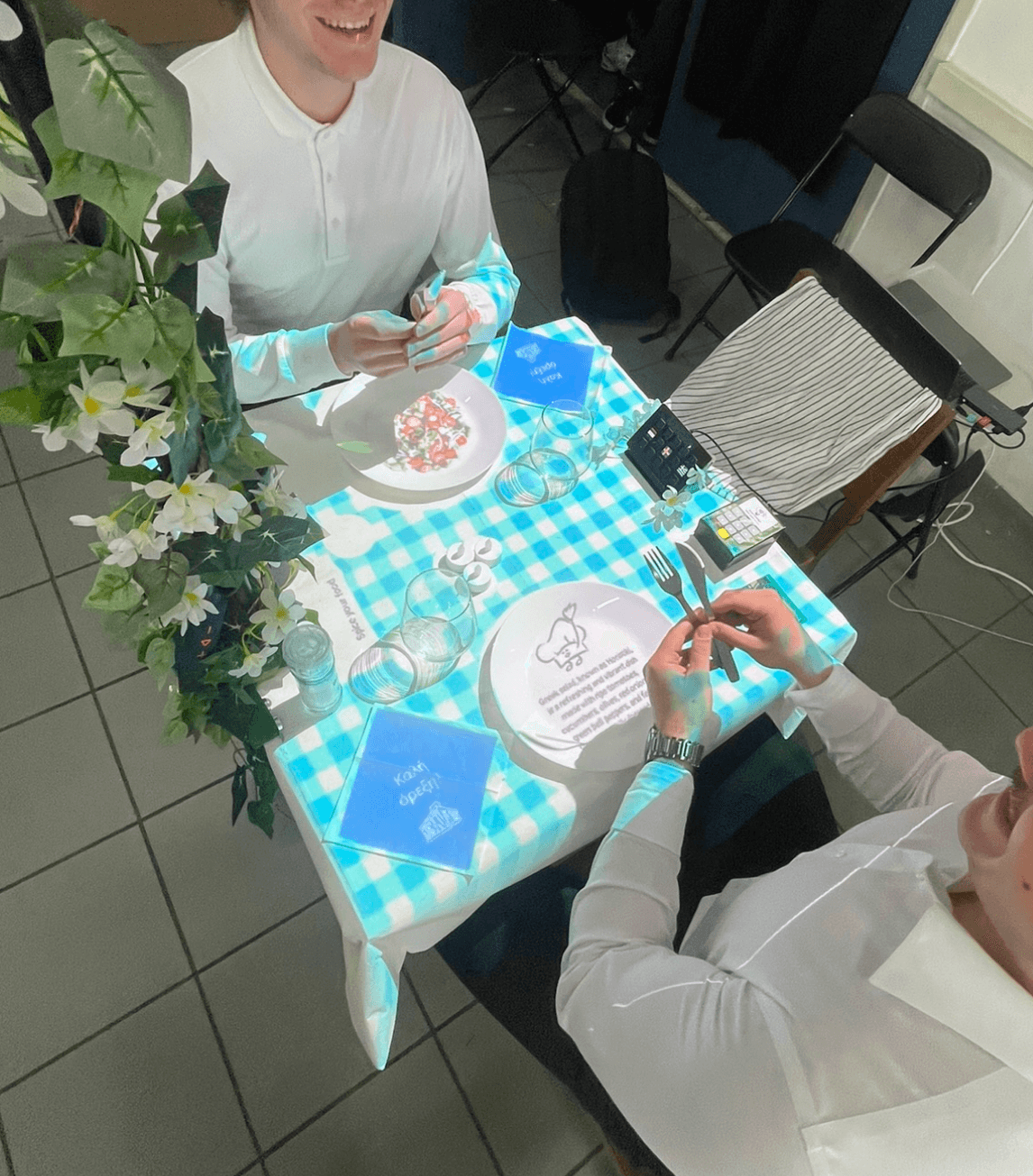
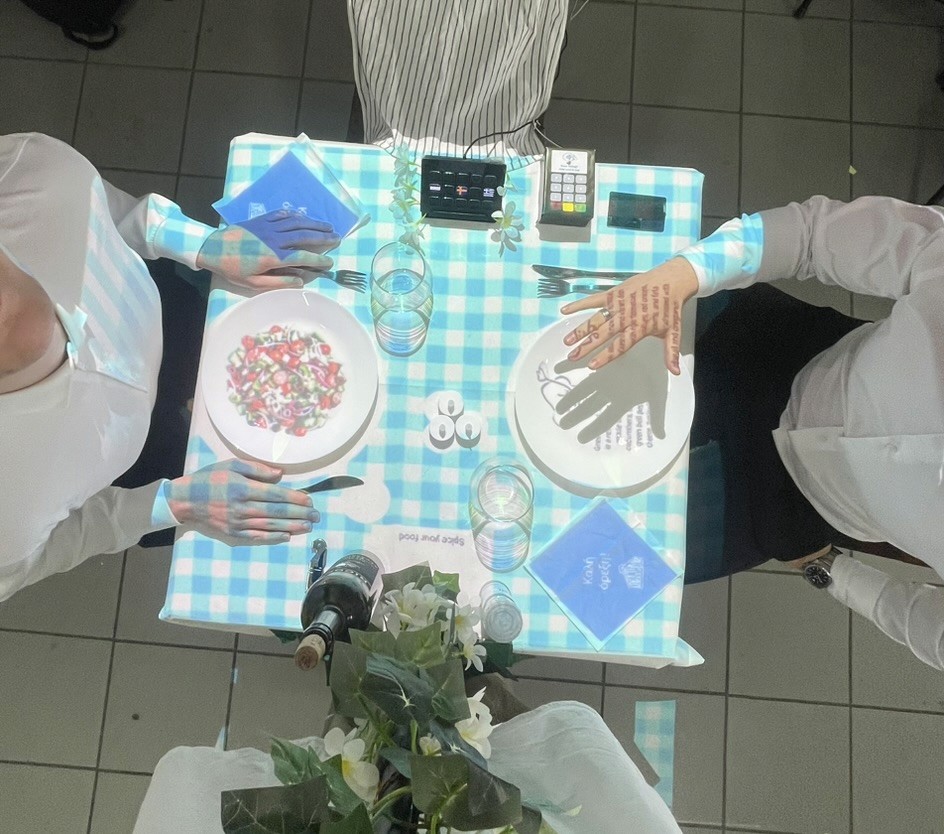
During my bachelors, my school hosted Human Computer Interaction lab weeks where my team designed and developed an immersive dining installation celebrating three world cuisines.
✦ Year:
24
✦ Role:
Visual designer
✦ Technology:
, Arduino & P5.JS
✦ Client:
THUAS
✦ My role and contribution
During this project I contributed mostly through conceptualising, making the visual design (Figma and CSS) and bringing good spirit through our many trial and errors.



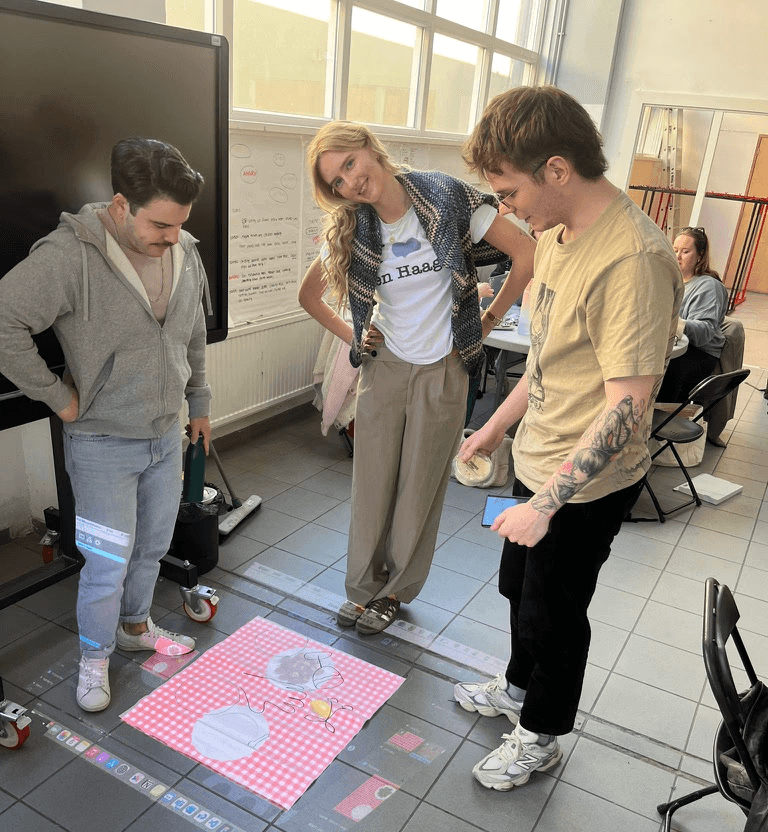
✦ Our Process
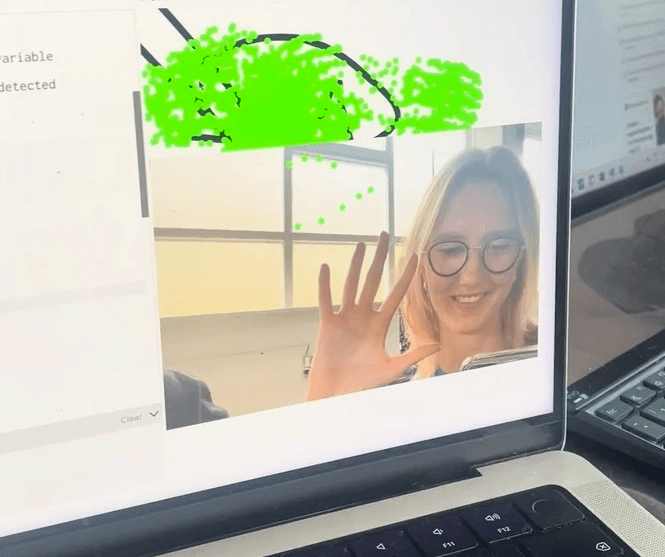
Define: Through desk research and group discussions, we identified shared insights and mapped them out visually. Rather than settling on a theme right away, we focused on the technology and exploring how hand-tracking (p5.js), projection, and Arduino could interact to create an engaging experience.
Ideate: We sketched and mind-mapped ideas on paper, combining quick brainstorming with visual exploration to connect themes, interactions, and technical possibilities.
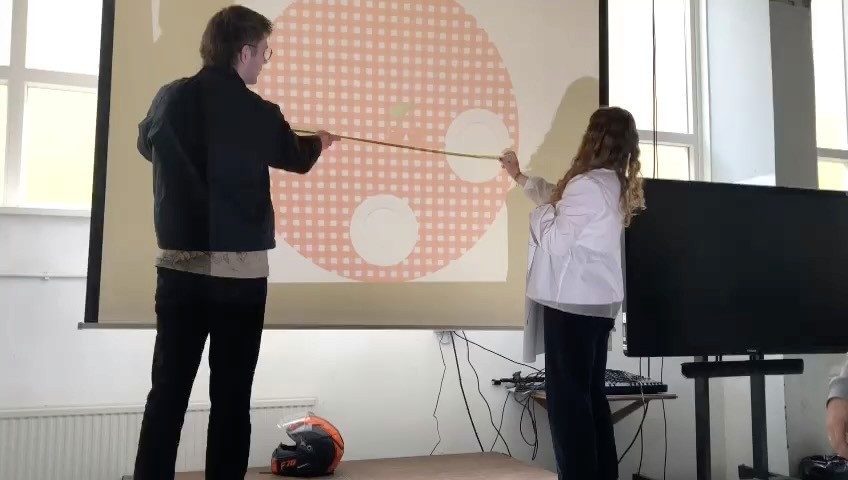
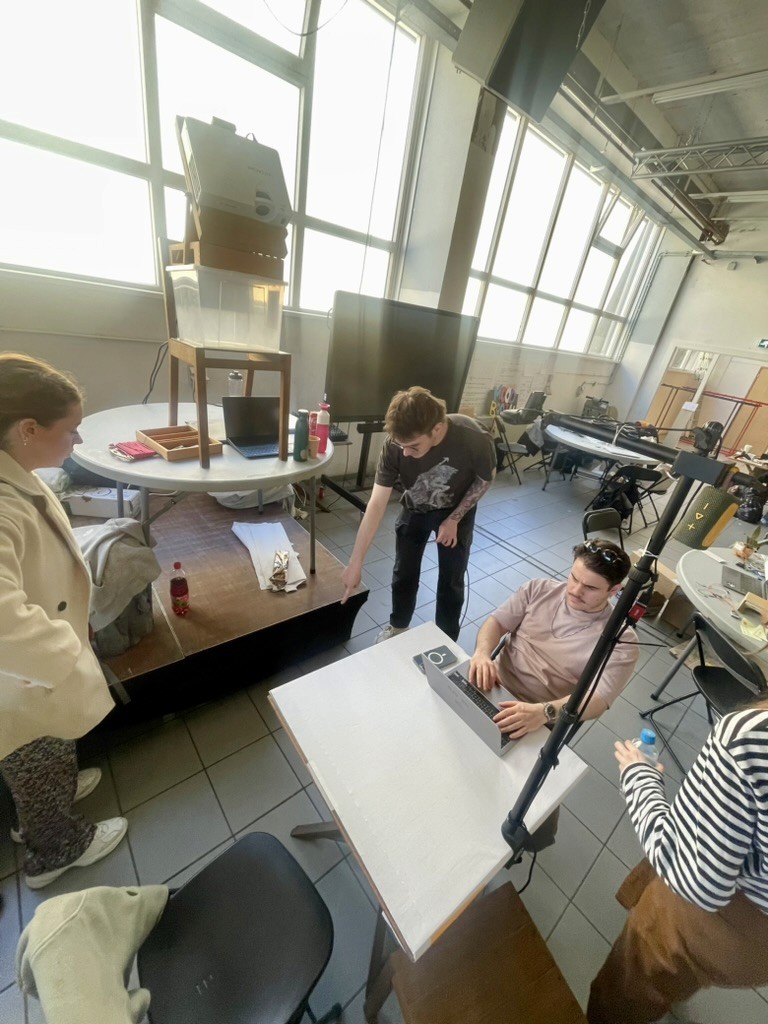
Prototype: With limited time, we prototyped efficiently using Figma and Wizard of Oz. We tested projections on different surfaces, aligned visuals in Figma, then used the same coordinates in code for hand-tracking and visuals to match.
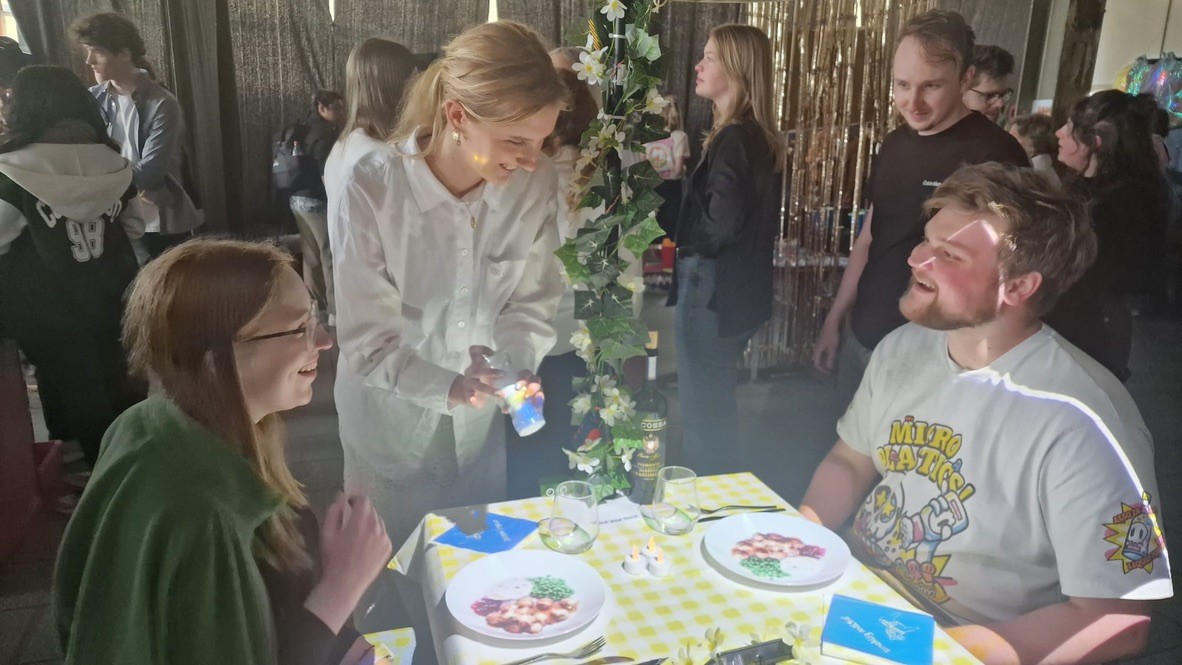
Test: We tested continuously with peers, teachers, and classmates, then gathered real insights during the exhibition, where visitors’ interactions led us to improve the flow for each round.
✦ Key learnings
Simplify the concept
With hand-tracking, projection, and Arduino all in play, it was easy to overcomplicate. Prototyping in Figma and testing with Wizard of Oz showed us the simplest interactions worked best.
Test continuously
We tested each interaction as early and quickly as possible. So that if something didn't work, cutting it wouldn't mean losing much time or effort.
Don't stop iterating
It would've been easy to stop once our initial idea worked. Instead, we used that momentum to keep building, leading to a result far more complex than we'd imagined at the start.
Build the story
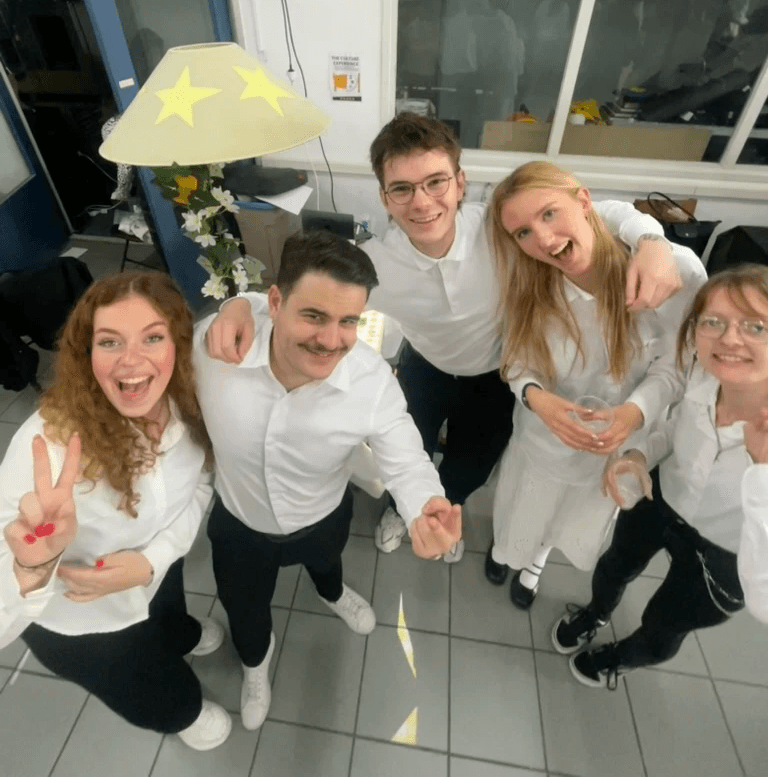
Once the tech worked, the real challenge was making it feel like one experience. We as a team dressed up and played waiters, nudging the users to the right interactions at the right time. We also decorated the table for both ambiance and hiding wires.