Fashion Behaviours
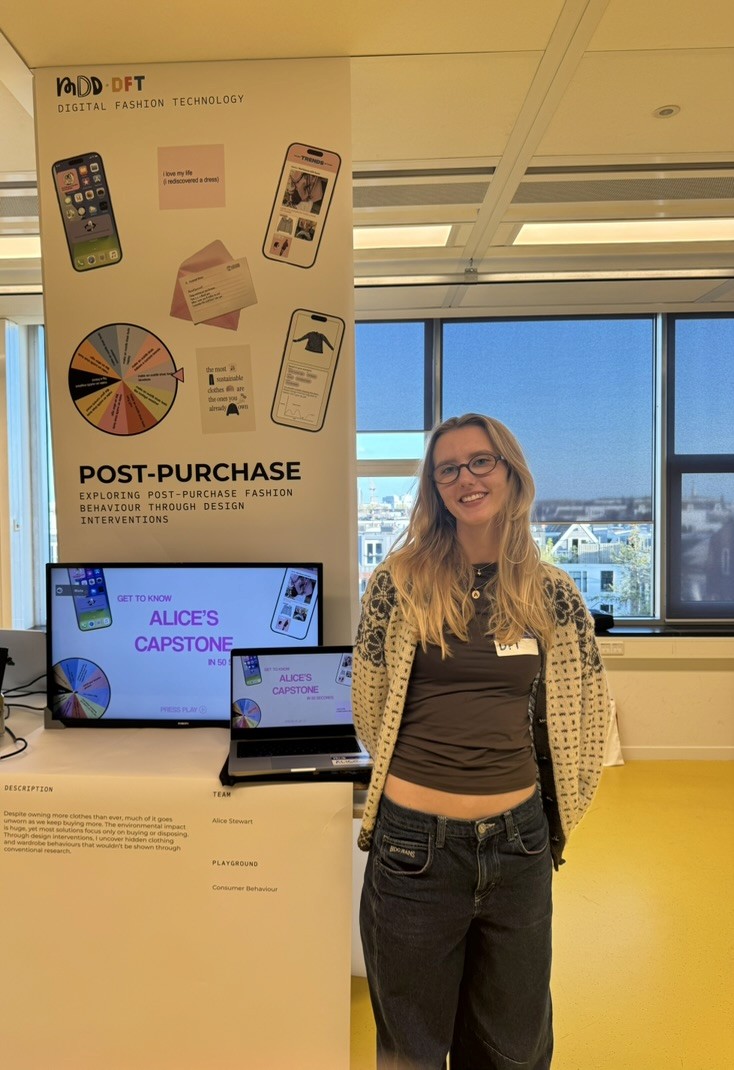
My master thesis was a research on Post-Purchase fashion behaviours, which was explored through design interventions. Aiming to learn more about our relationships with clothes and how we can revive them.
✦ Year:
26
✦ Role:
Design Researcher
✦ Technology:
✦ Client:
AMFI / HVA
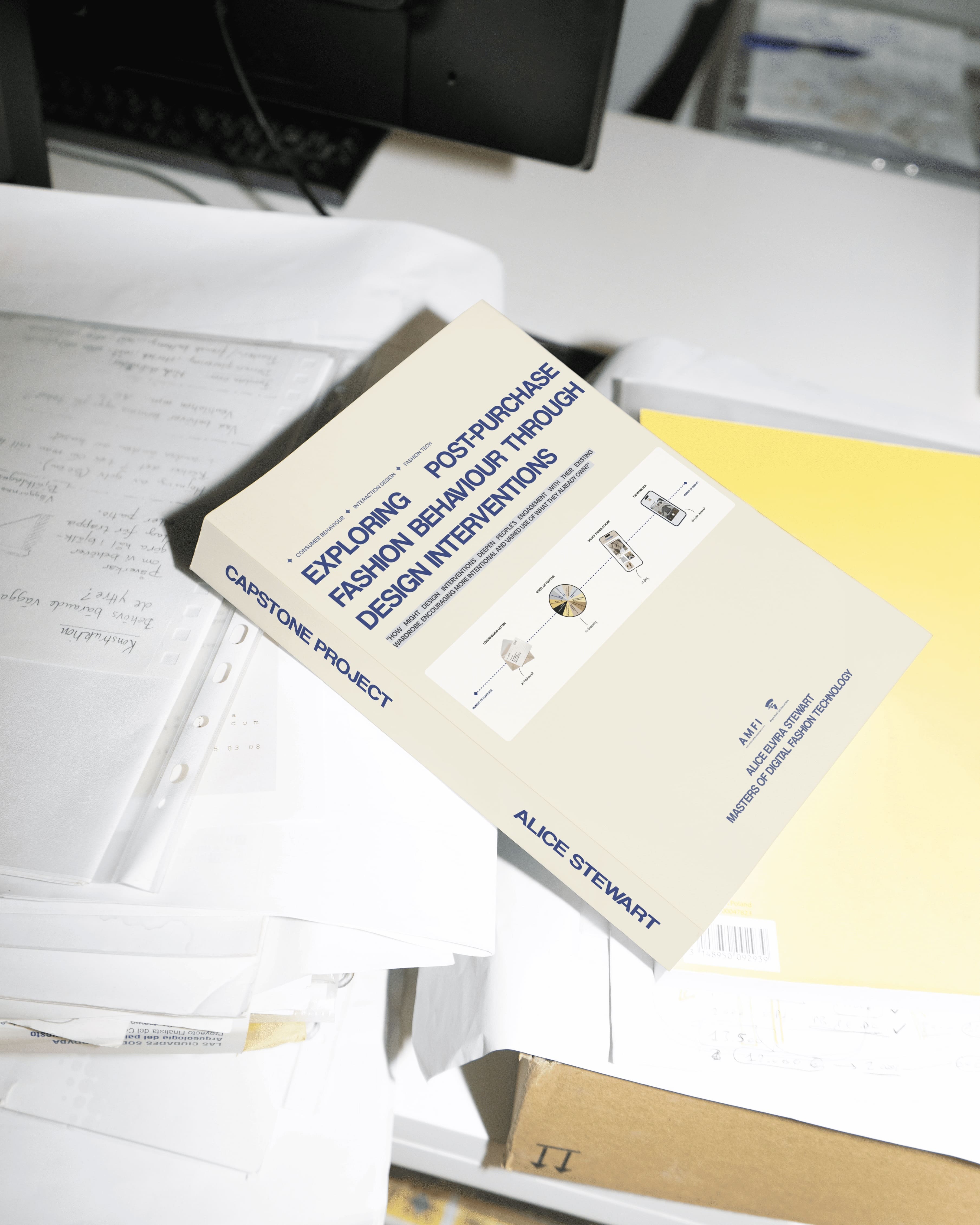
✦ This research investigates…
the overlooked middle ground when a garment is in our wardrobes. Rather than mapping which garments go unworn, I aim to understand the emotional relationship people have with their clothes. I do this through design interventions that surfaces and reactivates those relationships where it matters most: in the everyday behaviours of consumers navigating their wardrobes.
“How might design interventions deepen people's engagement with their existing wardrobe, encouraging more intentional and varied use of what they already own?”


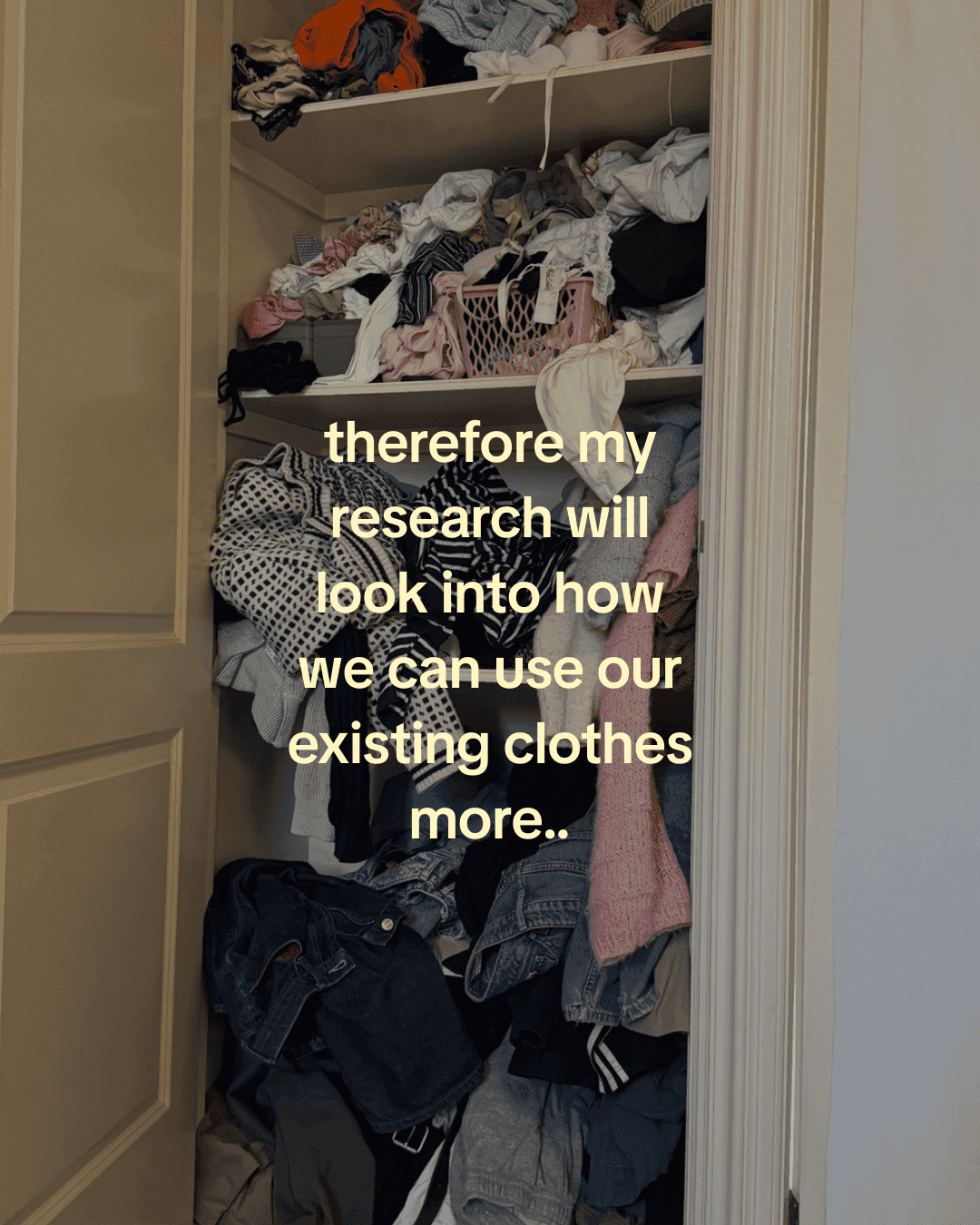

✦ My study
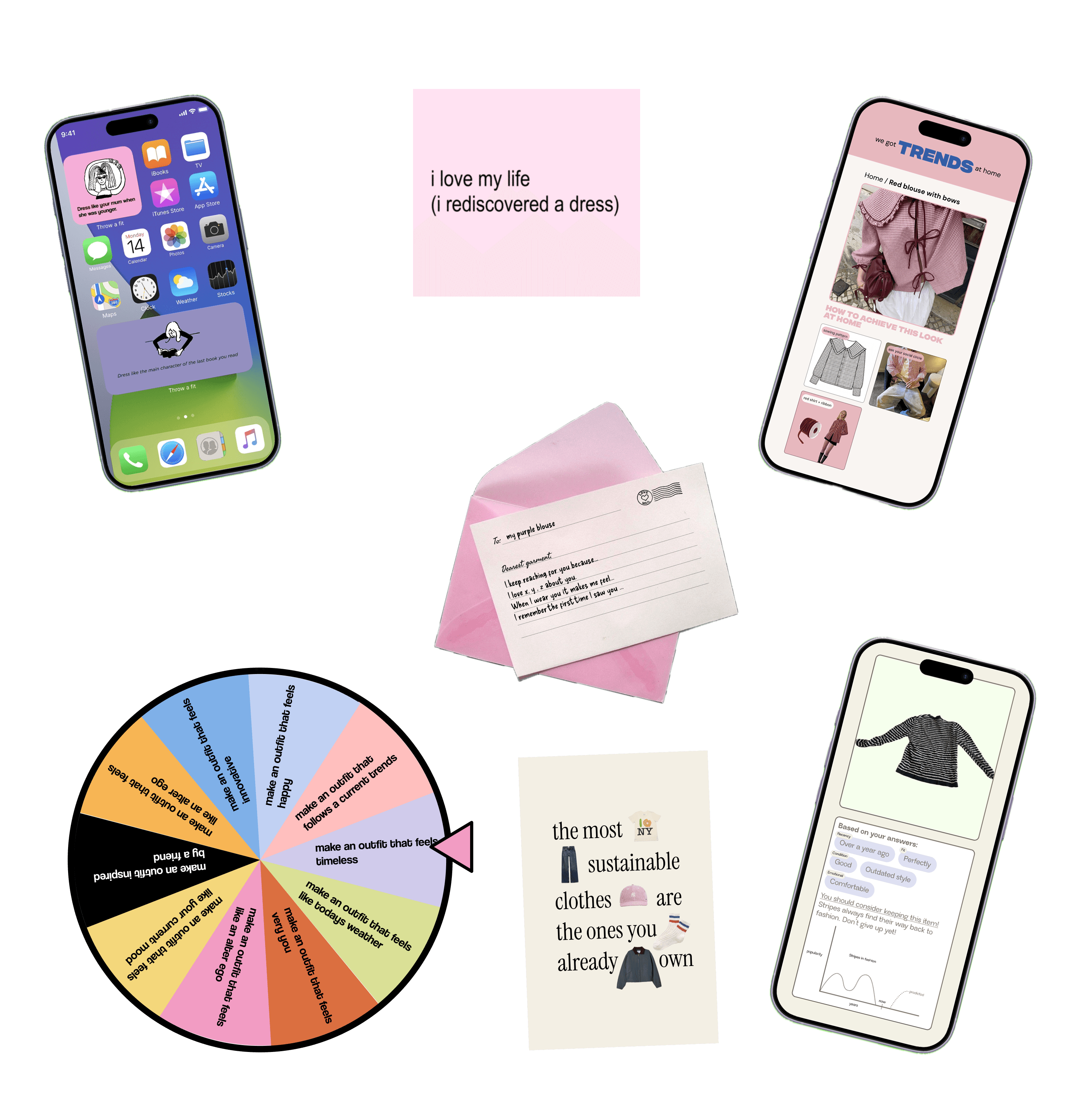
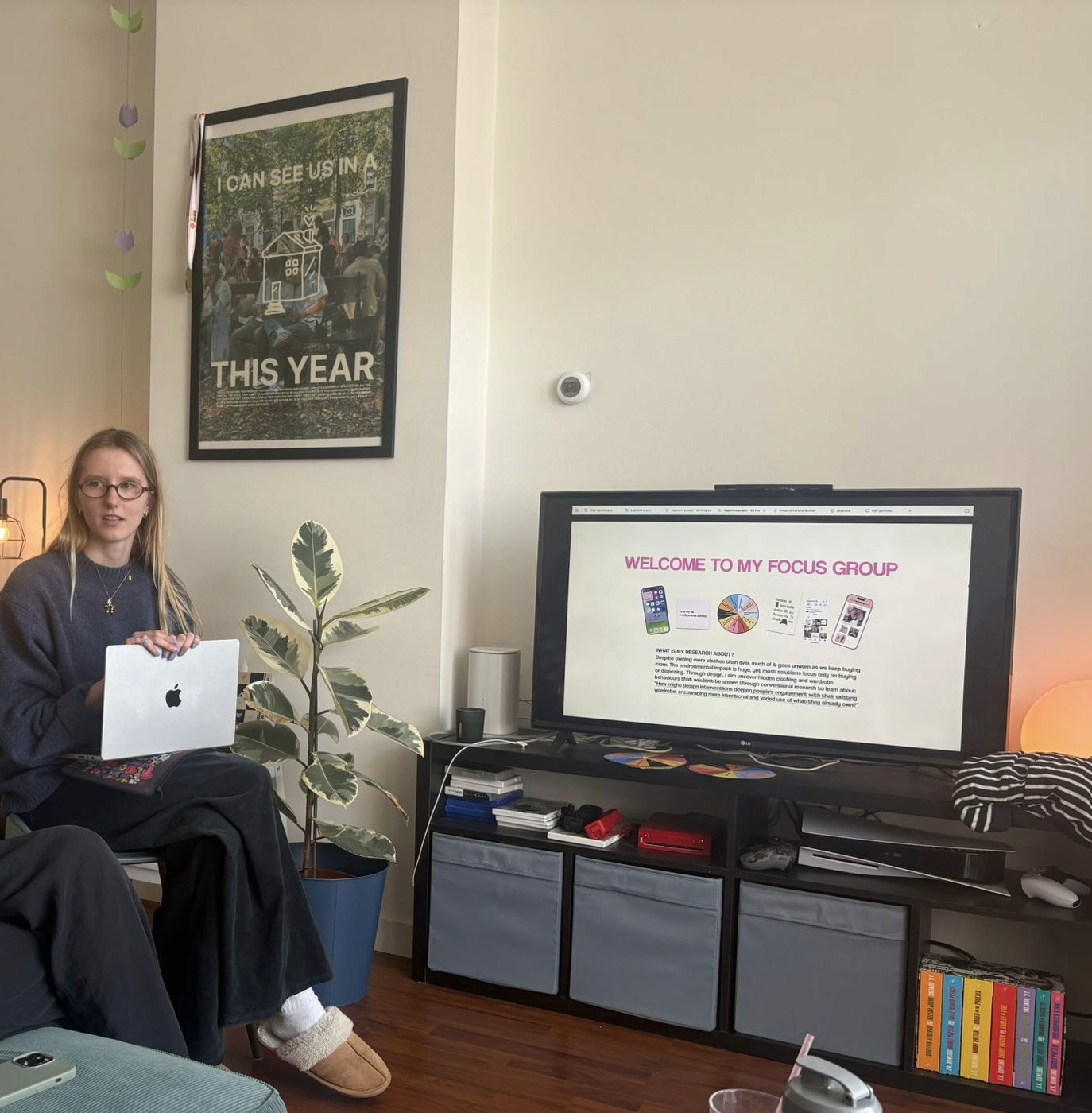
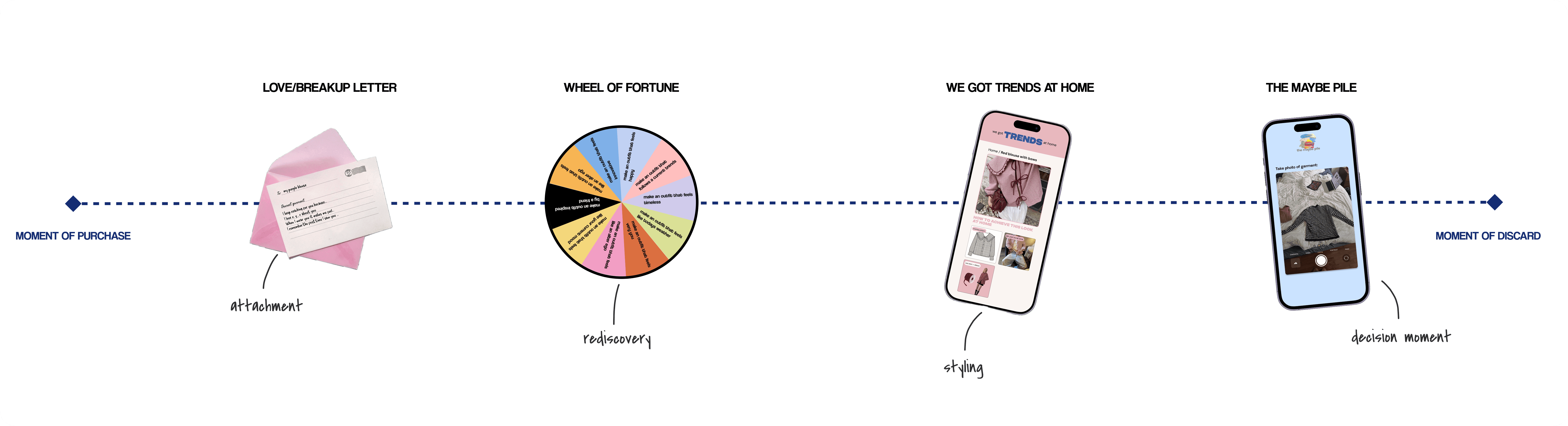
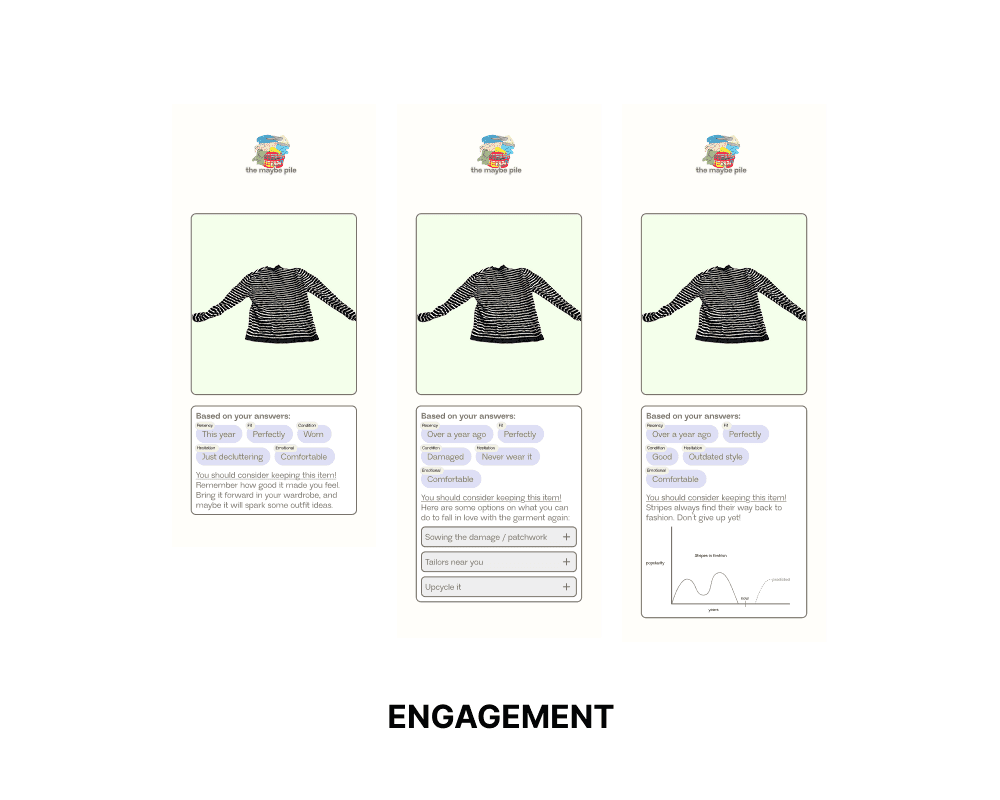
Using a research-through-design methodology, the study began with interviews, a personal wardrobe audit, and a literature review, which were synthesised into a post-purchase journey map. The map identified key moments of disengagement and reactivation, shaping where I chose to design. Four interventions were developed; Love/Breakup Letters, Wheel of Fortune, The Maybe Pile, and We Got Trends at Home. Each targeting different points across the journey. All were tested with participants (in their 20s & located in NL) and lastly discussed collectively in a focus group of 5.

✦ Key insights
Attachment
→ why clothes matter
Memory, confidence, versatility, and how a garment was received all shape how strongly we connect to what we own. Higher attachment leads to better care and longer use.
Reactivation
→ how dormant relationships return
Reactivation happens when garments fade in three ways: pushed to the back, emotionally filed away, or held in suspension for an occasion that never comes. Rediscovery is less an organisational problem and more a narrative one. People don't just need a reminder, they need a reason.
Context
→ what shapes behaviour in-the-moment
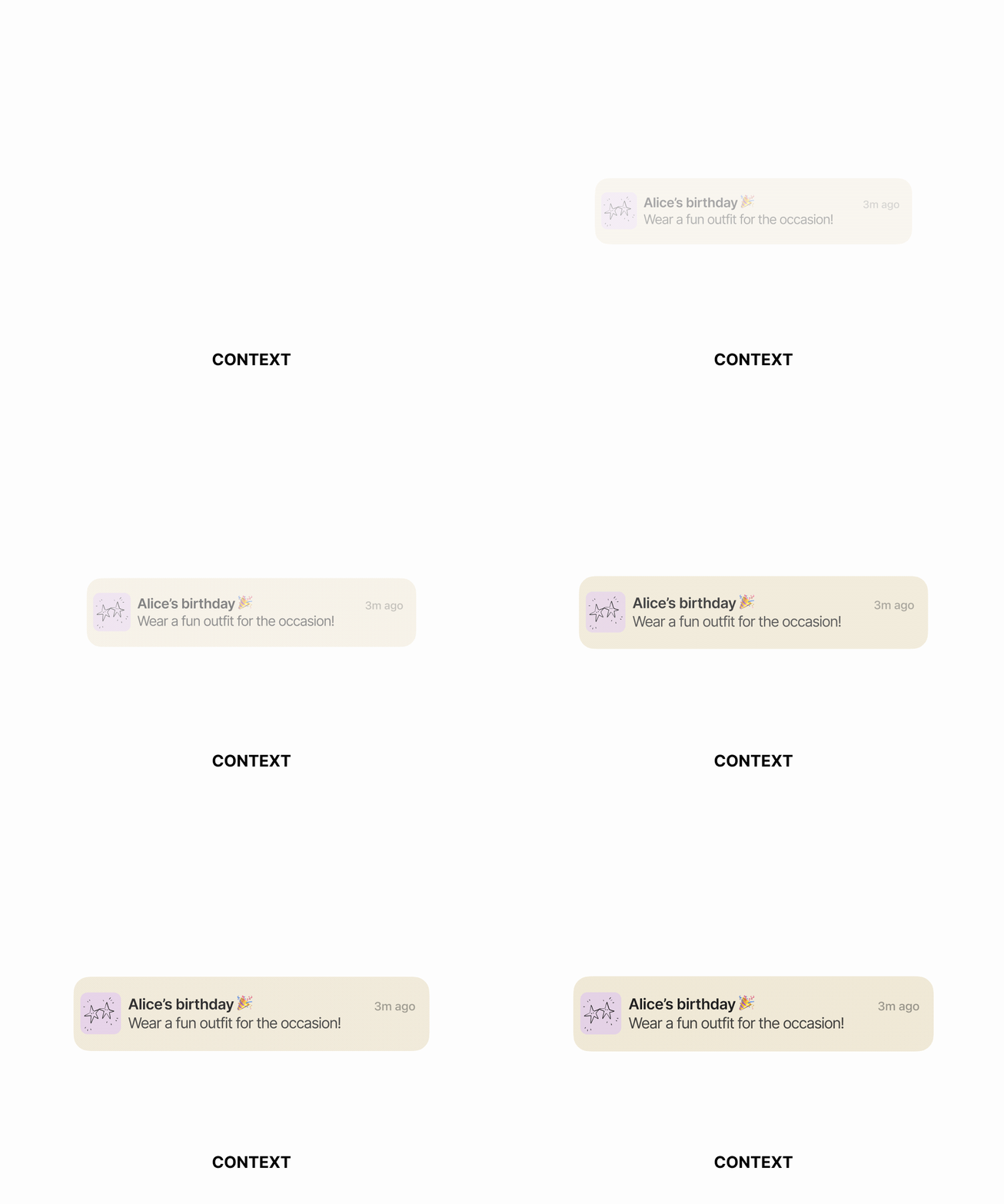
Shapes not only what people wear but whether interventions work at all. Occasion was the strongest motivator for extra effort, while habit and convenience dominate everyday dressing
Engagement
→ what makes interventions sustainable
Behaviour change that relies on daily repetition is hard to sustain. Any intervention needs to account for two phases: the initial novelty period, and the longer stretch where it must compete with habit.


✦ Reflection
The interventions prompted real reactions but lasting behaviour change remains unverified. The Love Letters produced the richest emotional data, the Wheel of Fortune the strongest behavioural insights, while the latter two broadened the picture of wardrobe behaviour overall. Prototype roughness was a methodological choice, but it limits how strong a claim can be made from the results.
Why does this research matter?
For consumers
Understanding which moments inspire you to engage with your wardrobe is enough to bring a garment out of dormancy. Moving away from the automatic pull toward something new and finding value in what's already there.
For sustainability practitioners
This research addresses how to account for emotional complexity rather than assuming rational decision-making. The gap between knowing and doing is structural, not informational. Awareness alone rarely creates action.
For the fashion industry
The post-purchase space is underexplored. As Digital Product Passports develop, brands will have growing infrastructure to maintain meaningful relationships with garments long after the point of sale.