Digital Product Passport
A multidisciplinary group project focused on humanising Digital Product Passports (DPPs) and making them more engaging and accessible for consumers.
My role
UX/UI-designer
Services Provided
UX/UI design
Technology Used
Framer, Figma
Year
2025
01
Overview
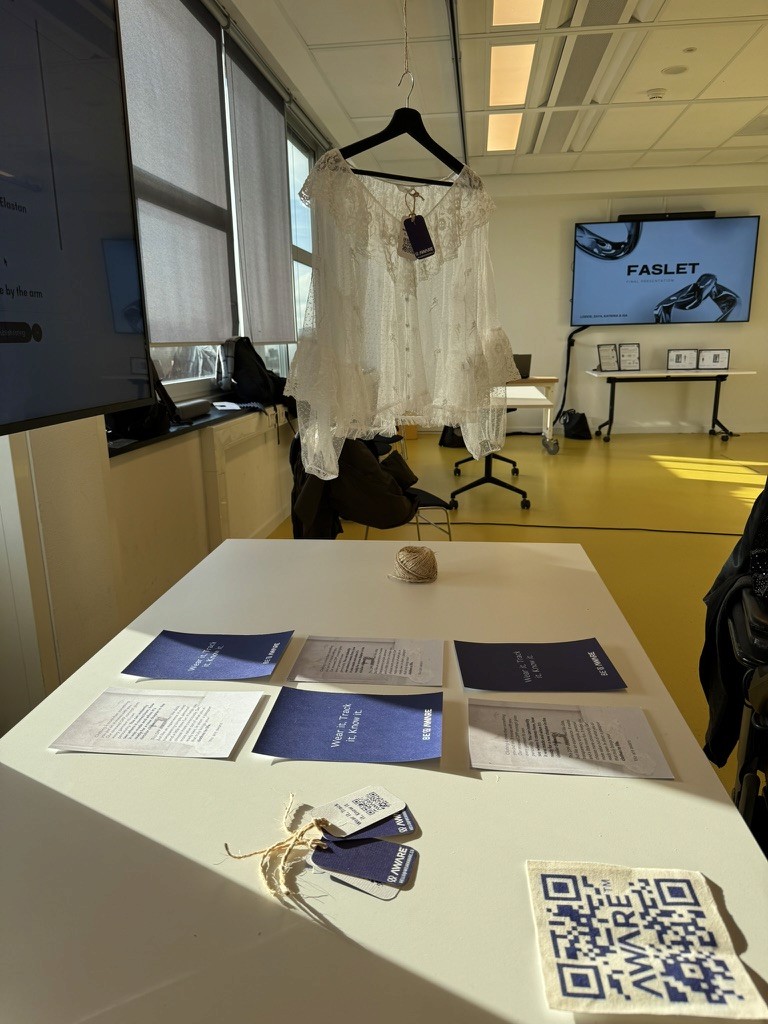
For my master in Digital fashion technologies I worked on an industry project together with Aware. Me and my group tackled this project by looking into how we can make DPPs more relevant for consumers and give value to their purchase and promote circular fashion with good after-life care options.
02
The study follows a research through design methodology, meaning that our research focuses a lot on creating and thereafter getting insights on how to move forward.
03
Final prototype
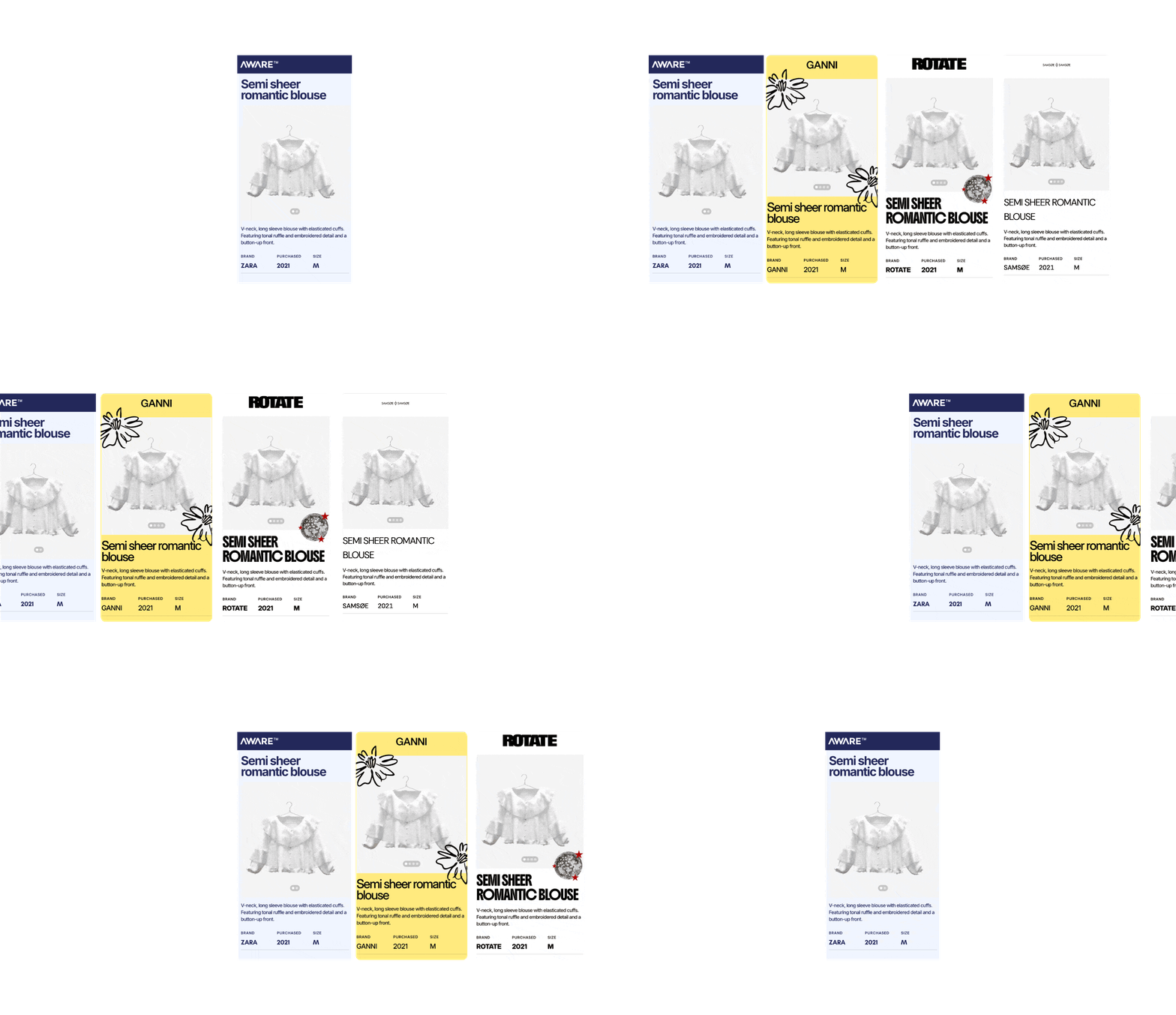
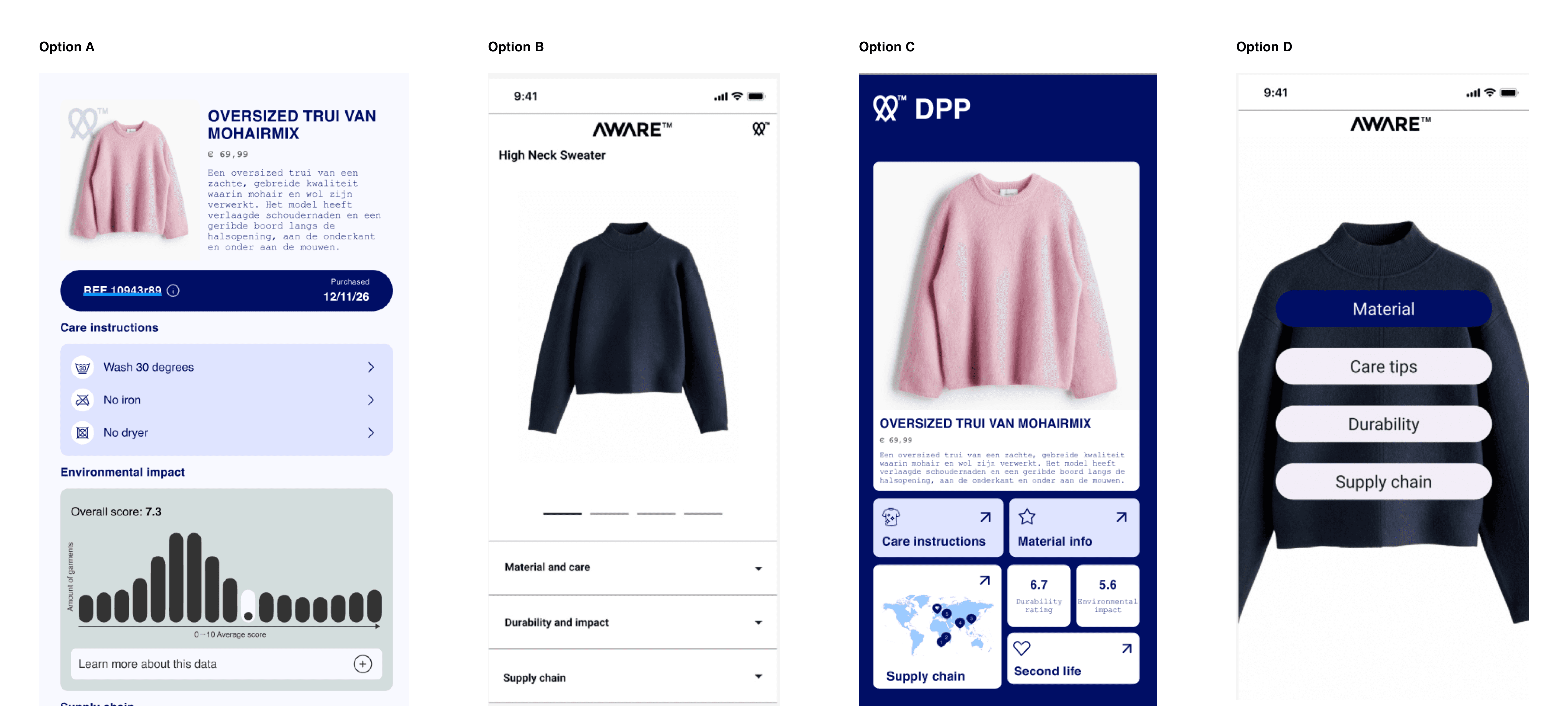
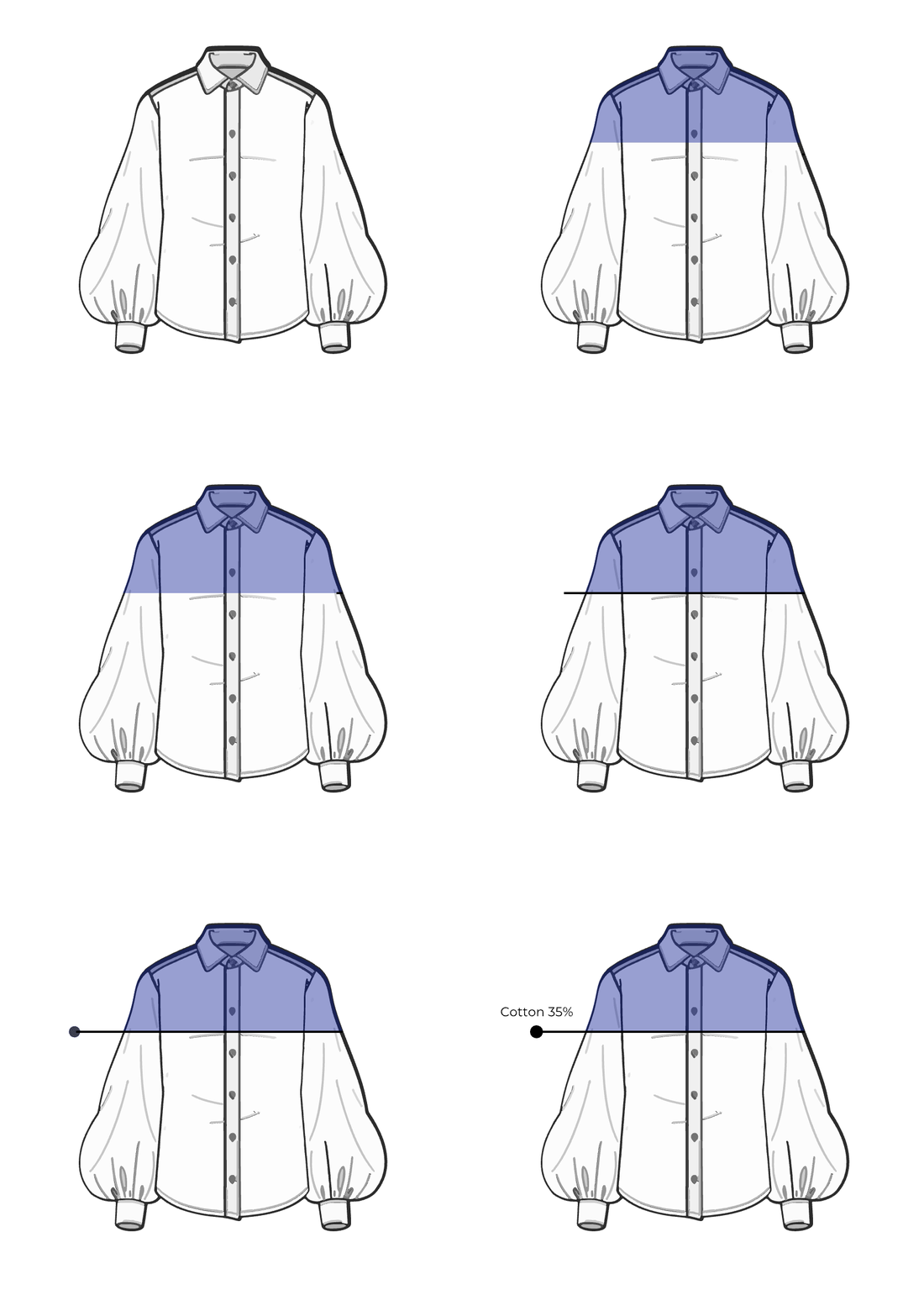
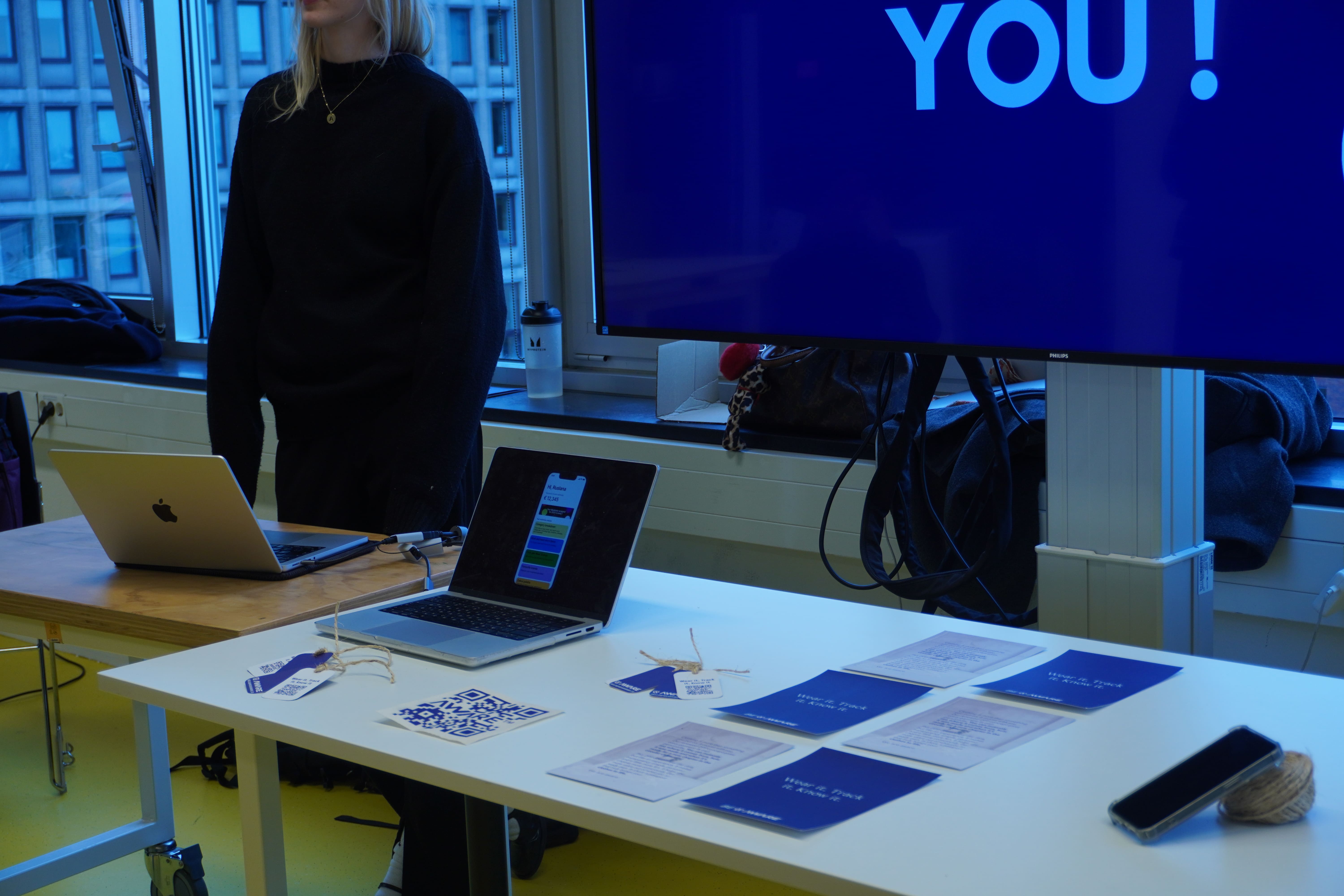
The final prototype is a website that is accessed through scanning QR-code on garments. From there the user is welcomed by basic information about their garment and can thereafter scroll down to accordions that they can decide to click on for further information. The expanded view of the accordions include different ways of showcasing data and key information of the garment, such as material, care instructions, environmental impact and supply chain map. Lastly it has a circularity section where the user is informed of ways to extend the garment’s lifecycle.
The styling of the prototype is intentionally minimalistic to ensure that the primary focus remains on the presented information. This approach also supports the exploration of a B2B (business to business) feature, where brands can custom the DPP by adding their own logo, font and colours. Hence not making potential partners being required to use Aware’s branding, and instead making the product their own.
After-life care:
The resell function is created to simplify the process of adding a listing and hopefully make more customers resell clothes they do not use. By letting the DPP add all the existing information of the garment, the user is left with just a few manual inputs, such as condition, price and shipping. The flow is made like a progressive form where each step visibly brings the user towards completion. At the end it generates a digital receipt containing all relevant garment and transaction data, which can be seamlessly transferred to any reselling platform of the user’s choice. Thereby aiming to lower friction across platforms and supporting circular fashion practices.